How to the clean walls in your holiday rental
Keeping paintwork fresh between guests, without the guesswork
July 2026
Floors get hoovered, bathrooms get scrubbed and the kitchen gets a proper going-over. Walls, though, tend to slip through the net. They fade into the background until the light hits them a certain way and suddenly you’re looking at a scatter of scuff marks near the skirting, a greasy shadow above the hob and a mystery smudge by the light switch. In a holiday home that turns over week after week, all of that adds up faster than you’d think. Clean, well-kept walls quietly signal that a place is cared for, and that impression starts the moment a guest walks through the door.
The good news is that walls rarely need anything drastic. With a gentle approach and the right cloth, you can keep them looking fresh for years. Here’s how to go about it.
Why walls collect more grime than you’d expect
Walls are working harder than they look. Suitcases knock against them, hands brush past on the way up the stairs and cooking sends a fine film of grease drifting across the kitchen. In a busy holiday let, that traffic never really stops.
A quick wipe-down as part of each changeover keeps things manageable. Leave it too long and marks set in, especially grease, which slowly bonds to the surface and gets stubborn. A light touch little and often always beats a deep scrub once a year.
The best way to clean painted walls
Most walls in a holiday home are painted, so this is where you’ll spend the most time. The trick with how to clean painted walls is restraint: warm water and a drop of washing-up liquid will handle the vast majority of everyday grime without stripping the finish.
Here’s a simple routine for cleaning walls without damaging paint:
- Dust first. Run a dry microfibre cloth or a soft broom head from top to bottom to lift loose dust and cobwebs.
- Mix your solution. A few drops of washing-up liquid in a bucket of warm water is plenty.
- Test a hidden spot. Try behind a door or low in a corner to check the paint doesn’t lift.
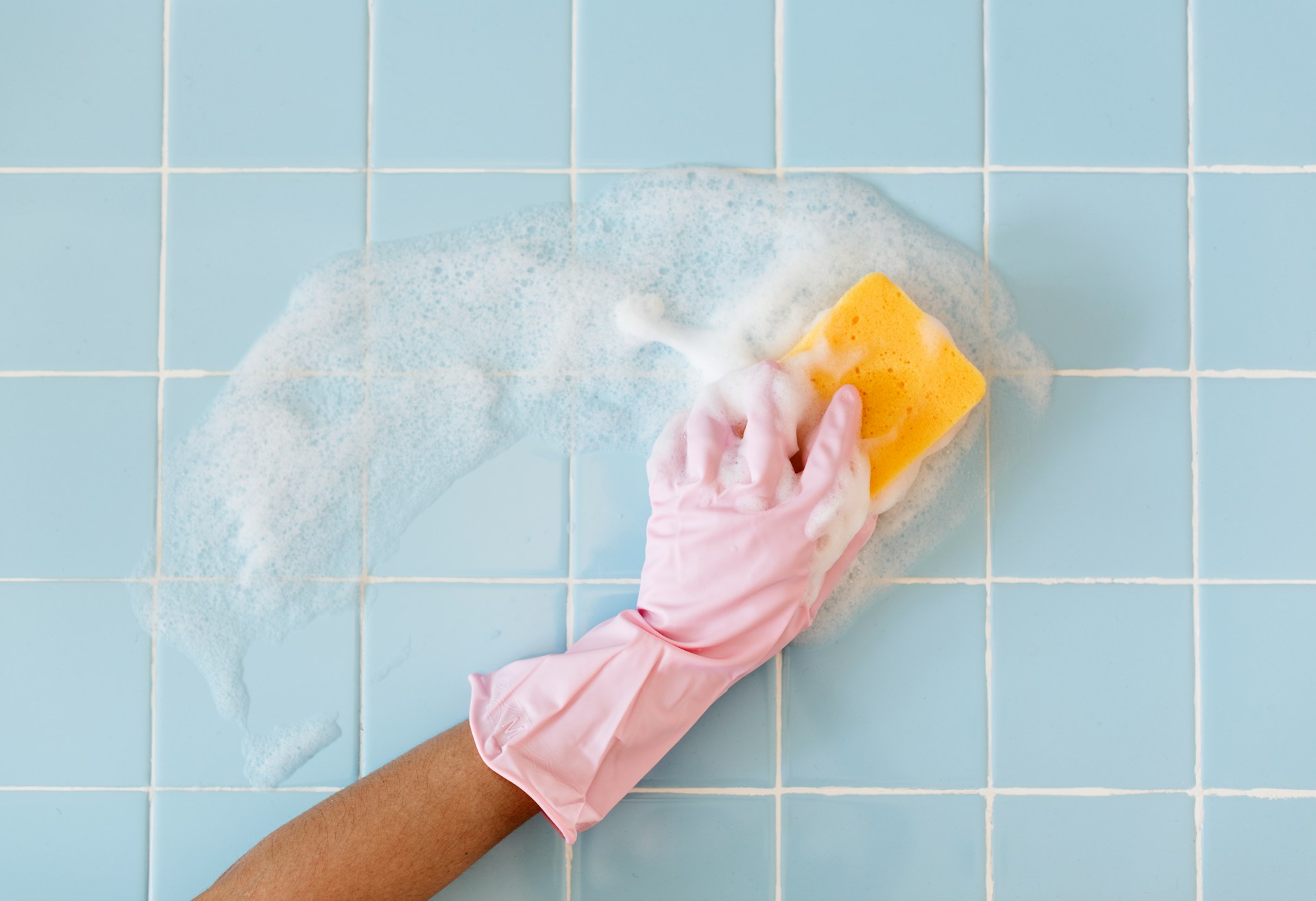
- Wipe gently in sections, working top to bottom so drips fall onto areas you haven’t cleaned yet.
- Go over it with a second cloth wrung out in clean water to lift any residue.
- Blot dry with a soft towel so you’re not left with watermarks.
A few things worth knowing. Matt and chalky paints are the most delicate, so keep the cloth barely damp and never scrub. Silk, satin and eggshell finishes can take a little more. And if you want to know how to clean walls without streaks, the secret is a nice second rinse and a proper dry, rather than letting the water evaporate on its own.
How to remove marks and stains from walls
General cleaning won’t always shift a specific mark, and knowing how to remove marks from your walls the right way saves you repainting far too often. Match the method to the mess.
Scuff marks and shoe scuffs
For how to clean scuff marks off walls, start with the gentlest option: a damp cloth with a touch of washing-up liquid, rubbed lightly in small circles. If it lingers, a bicarbonate of soda paste (a little bicarb mixed with water) works wonders. Dab it on, wait a minute, then buff away softly.
Pen, crayon and marker
Little ones on holiday sometimes treat a wall like a canvas, so knowing how to remove pen marks from walls is worth having up your sleeve. A dab of bicarbonate of soda paste often does it. For biro, a cotton bud with a small amount of surgical spirit can help, but test it first as it can lift colour from some paints. Work from the outside of the mark inwards so you don’t spread it.
Greasy patches in the kitchen
Cleaning greasy walls needs something that cuts through the film rather than smearing it around. Warm water with a stronger squirt of washing-up liquid usually wins. For heavier build-up above a hob, a paste of bicarbonate of soda left on for a few minutes will loosen it before you wipe clean and rinse.
Whatever the stain, the golden rule for how to remove stains from walls is to act gently and early. Harsh scrubbing or strong chemicals will often take the paint off along with the mark.
How to clean wallpaper without damaging it
If your holiday home has feature walls or period paper, the rules change. Knowing how to clean wallpaper properly means first checking whether it’s washable or not. Vinyl and coated papers can handle a barely-damp cloth with mild soapy water, wiped gently and dried straight away.
Traditional, non-washable and textured papers are far more delicate. Stick to dry methods here: a soft brush for dust, or a piece of white bread pressed lightly onto a mark can lift surface grime without moisture. When in doubt, less is always more, because a soaked seam can peel and there’s no undoing that.
Building a simple wall-care routine
You don’t need to tackle every wall at every changeover. A light rhythm keeps the whole property looking after itself:
- A quick dust and a scan for fresh marks between each booking
- A gentle wipe of high-traffic zones, such as hallways, light switches and behind doors, every few weeks
- A fuller wall clean once a season, kitchen and bathroom included
- A small tin of the original paint kept aside for touch-ups that no cloth will fix
Keeping dirty walls in check this way means you’re far less likely to face a full repaint, and your listing photos stay looking as good as the day they were taken.
Keeping your property looking its best between guests
Presentation and peace of mind go hand in hand for anyone letting out a home. Fresh, mark-free walls are one of the small details that lift a listing, and they show at their best in the photos guests see first. As a holiday rental management platform, Holidu includes professional photography as part of getting your property online, and homes with professional photos attract up to 5× more bookings. A well-kept space gives those images something to work with.
Wear and tear is part of the deal when strangers stay, though, and the odd knock or scuff will happen no matter how careful your guests are. Holidu Protect offers up to €50,000 of damage cover with no deposit for you to chase or hold, so an accidental mark on the wall stays a quick touch-up rather than an awkward conversation. Backed by support in your own language and knowledge drawn from hosts across seven European markets, it’s one less thing on your plate at changeover.
Look after your walls with a little regular care and they’ll keep quietly doing their job, making every guest feel they’ve walked into somewhere that’s genuinely looked after.