Guest Check-in: The Complete Guide and Checklist for Hosts
A handy checklist with everything a host should consider before their first guest check-in
October 2025
The first check-in is undoubtedly a big milestone for any host. It’s a process that must be carried out with care, as it determines the guest’s first impression and is an opportunity to obtain a good review on a holiday rental portal. In this article, we’ll detail how to proceed with the check-in process for your holiday rental, from preparing the house to welcoming your guest.
The value of the pre-check-in
Effective holiday rental check-in management begins well before the guests arrive. For pre-check-in, you should not only prepare your accommodation so that it looks clean and welcoming, but also communicate well with your guests before they even arrive.
Digital communication
A few days before your guest’s arrival, it’s good practice to send a welcome message containing the exact address of the accommodation – ideally sending the location via Google Maps – and information on how to check in. In particular, if your rental has self-check-in, the welcome message is the right opportunity to provide all the necessary instructions.
To avoid misunderstandings, you can also create a digital holiday home check-in guide explaining the various steps for collecting the keys/obtaining key box codes, where the key box is located (with pictures), and so on. You can send this to guests before check-in to give them detailed instructions about how to check in, as well as more information about the rental. Inside, you can include:
- The credentials for Wi-Fi access
- Directions on how to carry out waste separation (if your rental has waste separation)
- Places of interest in the vicinity, from restaurants and bars to supermarkets and monuments (include GPS locations for a seamless experience)
- Emergency numbers to call in case of problems, including yours and that of a trusted neighbour
- A map containing information on the location of safety devices, such as fire extinguishers, carbon monoxide detectors, and the first aid kit
- The check-out time and instructions for returning the keys
Preparing the accommodation
Before the guest’s arrival time, ensure the house is impeccable from every point of view. To make sure you leave nothing to chance, you can complete this holiday home check-in checklist with everything you need to remember:
- Listing description: It’s good to first confirm that the description of your holiday rental listing correctly reflects your property. A truthful description that includes an accurate list of amenities will help make sure that your property meets guest expectations once they arrive, which can also help avoid negative reviews.
- System check: Make sure that all appliances and main systems are working, such as the boiler and heating/cooling systems. Also, check that any light bulbs are in good condition and that the Wi-Fi connection is working correctly.
- Towels: Provide guests with a kit consisting of three towels: a large bath towel, a medium face towel, and a small hand towel. You can leave these on the bed for easy access.
- Bathroom: Ensure two rolls of toilet paper are available for each guest, and check that there are sufficient supplies of soap, detergents (if you have a washing machine), and personal hygiene products.
- Bed linen: Bedding should consist of two pillows per person with pillowcases, and a complete bedding set consisting of a bedsheet and a duvet. It’s a good idea to provide additional duvets for different seasons (summer and winter duvets) along with blankets of various weights, which you can leave inside the wardrobe.
- Kitchen: Guests will likely cook several meals inside the holiday home. For this reason, the kitchen must be equipped with a kit including salt, pepper, oil, and sugar, as well as coffee or tea. Provide guests with clean tea towels and a new sponge for washing dishes, as well as some washing-up liquid.
- Safety devices: Check that your rental has all the safety devices required by law, both for the guest’s safety and to avoid fines. The safety devices you need change depending on which country your rental is located in, so you will need to research this in advance.
- Cleaning: Make sure you have thoroughly cleaned the holiday rental and not missed any commonly overlooked areas like behind cabinets and appliances, under furniture, the AC filter, and fabric surfaces. Also be sure to disinfect areas that are often touched by guests, like doorknobs, handles, appliances, remote controls, kitchen surfaces, light switches, and so on.
The arrival phase
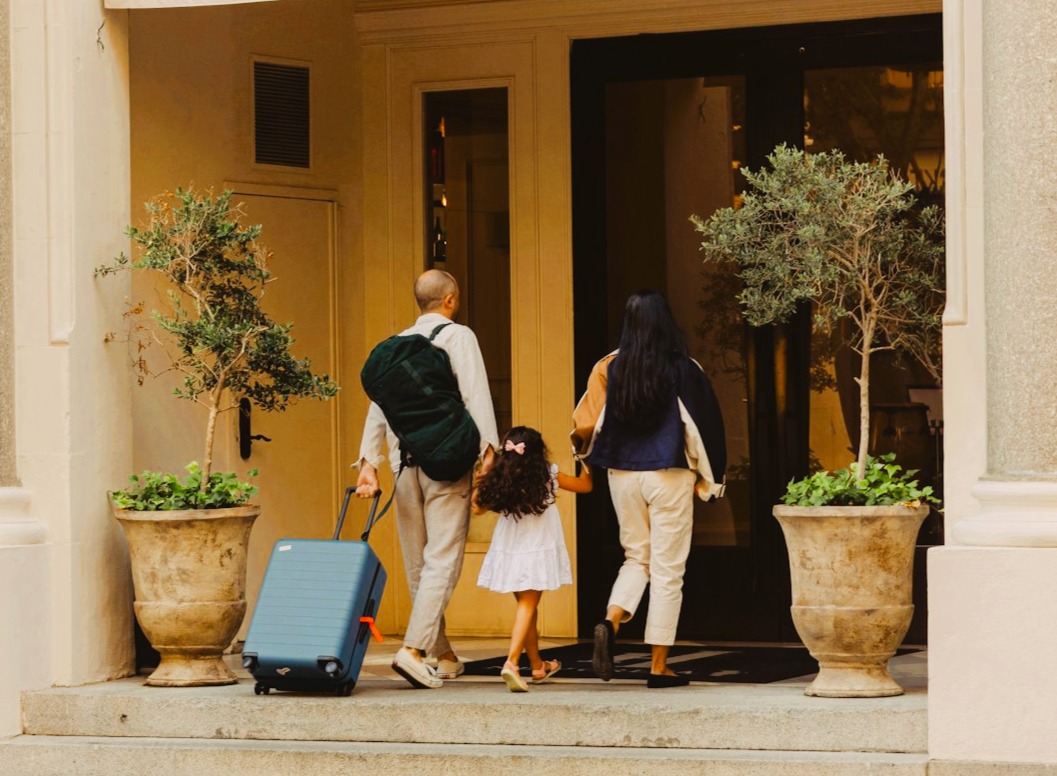
Currently, you have two options for managing your holiday rental business: in-person check-in or self-check-in. Welcoming your guests personally is a good way to break the ice and create a friendly relationship. You will have the opportunity to show your guests around the apartment, where you can explain how the appliances work, remind them of the main house rules, and recommend the best local spots.
If you don’t have the possibility to welcome guests in person, you can proceed with self-check-in, taking care to comply with any rules regarding self-check-in (this will be explained below). If you want to make a difference, include a welcome pack for your guests. For example, you can leave local products for guests to taste, provide cold drinks, or give a small gift, such as a personalised key ring featuring your holiday home branding – a good idea to advertise a holiday home. To conclude the arrival, let your guests know that they can contact you for any problems. Intervening early is the best strategy to avoid inconvenience and bad reviews.
Legal requirements
Every host must perform a series of bureaucratic procedures, which vary according to the location of your accommodation. In general, the most important requirements are:
- Registration of guests with the police: In many countries like Italy, Spain, France, and Portugal, hosts must register guests with the police headquarters within 24 hours. Remember to do this to avoid fines.
- Tourist tax: If your rental is located in Italy, Spain, France, Portugal, or Germany, you may be obliged to collect the tourist tax from guests and pay it to the relevant authorities. Of course you will have to confirm first whether your municipality has a tourist tax, as not every region does. In most cases, the municipality has a platform for registering guests and periodically paying the tax. Some municipalities even have agreements with major platforms used to rent out holiday homes, such as Booking and Airbnb, to automatically include the tax in the price per night.
- Regional registration: Aside from police registration, you may be required to provide your municipal authority with other information about your guests. For example, in Spain you have to submit yearly invoices including information like the number of guests, check-in and check-out dates, as well as the purpose of each stay. Again, you will need to stay informed about what data is required for your region and remember to log this for all stays.
- Insurance: Some countries like Portugal, Italy and France require you to have holiday rental insurance before you can start renting. It’s important to check whether this is required for your country and region, and to make sure you have a valid insurance policy before accepting guests.
- Self-check-in restrictions: If you own a holiday rental in Italy, you will have to adhere to further rules regarding self-check-in. In Italy, hosts have to personally verify the identity of their guests – which means either being physically present or conducting a video call with guests at the time of check in.
Check-in for beginner hosts: how to simplify it
Check-in can be made much simpler by using platforms like Holidu. With Holidu, you can gain access to several benefits:
- Global visibility: Hosts can publish adverts on 27 different booking platforms all from a single account, including VRBO, Airbnb, and Booking.com. This eliminates the risk of overbooking by allowing you to manage calendars across multiple holiday rental websites perfectly.
- Professional photoshoot: Holidu offers hosts a free photoshoot to highlight your property’s strengths. Quality photos can really make the difference, especially considering the increasingly fierce competition.
- Simplified property management: With a single app, you can manage everything related to your holiday home, from welcome messages to collecting payments.