How to make a small holiday home feel bigger
July 2026
Anyone running a holiday rental knows that a traveller’s first impression of the listing makes all the difference to whether they book. In an increasingly competitive market, guests searching for a holiday rental on a booking website compare several options within minutes, and much of that decision comes down to how visually appealing each listing looks. That first impression is often what tips the scales between one property and another, and ultimately decides whether the listing converts into a booking.
When you advertise your holiday home, the goal is naturally to turn every viewer into a guest. To hold their interest, it’s worth paying close attention to price and amenities, but also to how the property looks in photos. This visual element, shown through images of the space, shapes the guest’s perception before they’ve even set foot inside, so it needs to live up to expectations of comfort, space and light.
With that in mind, it’s worth understanding how to make a house look bigger through the images you choose, so your holiday rental feels as inviting as possible. This matters especially when you’re decorating a smaller holiday rental, where creating that sense of space and comfort can directly boost how many people click through and book. It’s exactly why several services have sprung up around online platforms to help with this, including Holidu’s own photography service, which we’ll come back to later.
Read on to discover how to decorate a small room and prepare your holiday rental using interior design and home staging techniques that make the space feel larger and more inviting, helping you attract more interest from travellers and boost your bottom line.
The importance of home staging in your holiday rental
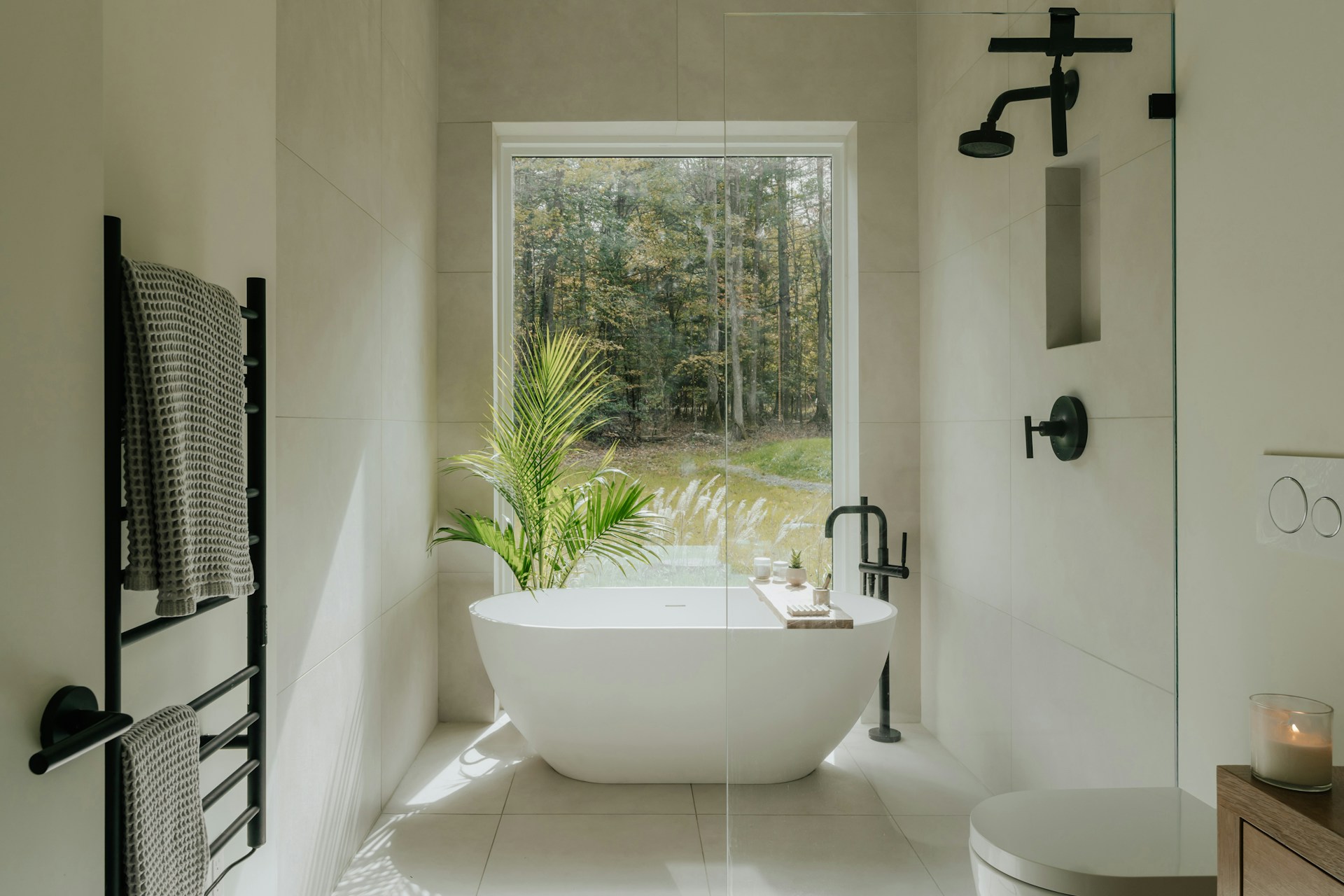
Preparing a rental strategically so that it appeals more to guests is a technique known as home staging. It involves arranging the property using principles of organisation and interior design that highlight its strengths and play down any limitations. One of the areas this process can improve is how spacious the property feels, since it’s entirely possible to create the visual impression that rooms are larger than they actually are.
In smaller holiday rentals, this approach can be particularly worthwhile, since how comfortable and easy a home feels to move around in is closely tied to how spacious it appears. A well-staged holiday rental signals professionalism, quality and care: qualities that guests, whether local or from further afield, value and are willing to pay a bit more for. In this article we’ll discuss some of the best small space design ideas and interior design tips for small spaces, so you can improve your viewer’s first impression of your holiday home.
Investing in home staging techniques, then, is a smart way of winning over more guests, boosting your click-through rate and, ultimately, your bookings.
Strategies to make your holiday rental look bigger
So how exactly can you spark that extra interest when you’re letting out a smaller holiday home? It’s a question shared by many hosts running a holiday rental in a compact property.
The first thing worth knowing is that how spacious a room feels doesn’t always come down to its square footage. With the right visual design and organisation strategies, you can make the most of the space you have and make it far more appealing to prospective guests. Here are the strategies we’d recommend, covering everything from holiday let interior design basics to quick fixes:
- Making strategic use of light colours
- Positioning mirrors well
- Furniture: from multifunctional pieces to scale
- Creating visual continuity across walls and floors
- Making the most of natural light
1. Making strategic use of light colours
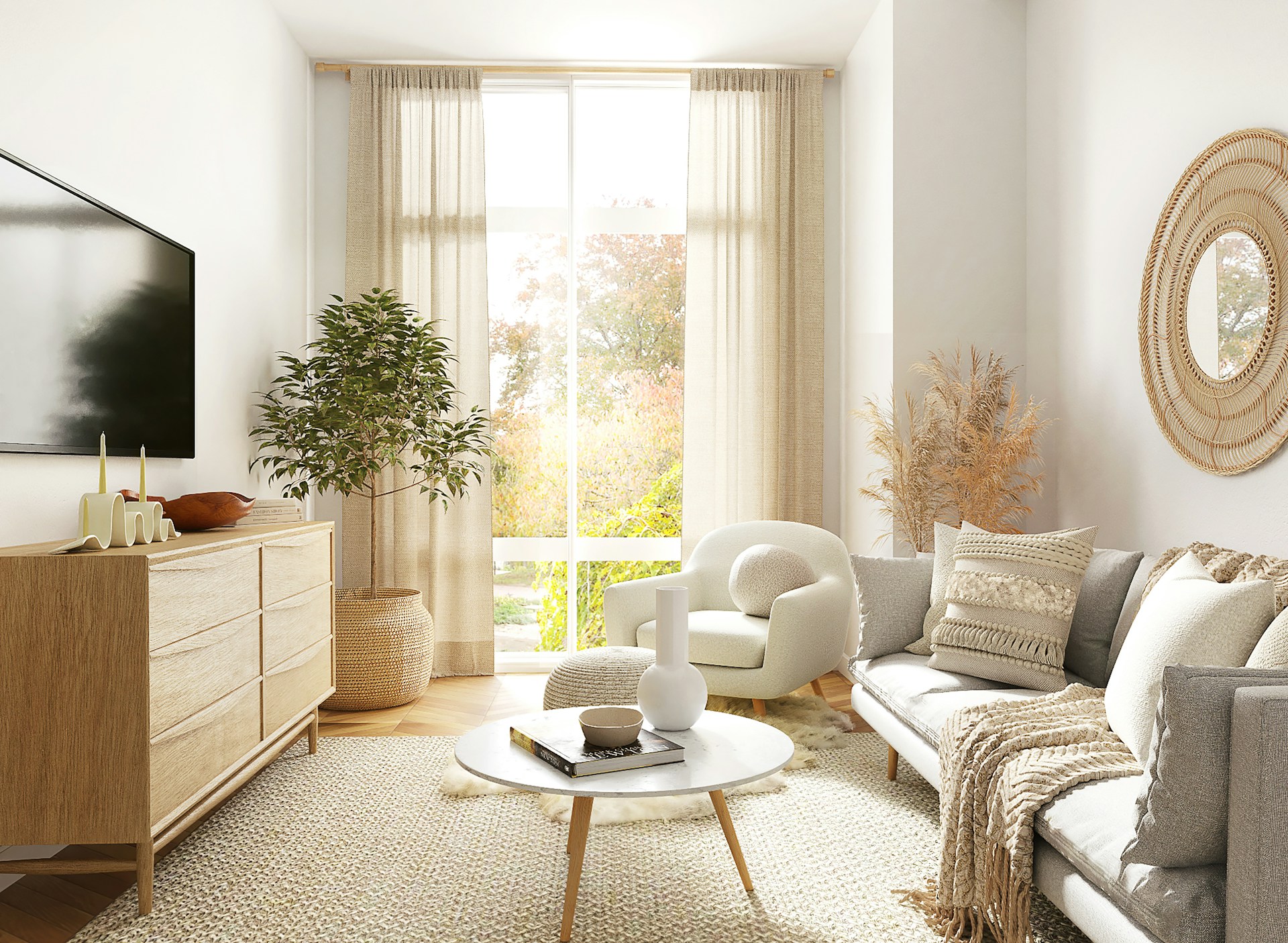
The colours you choose for your holiday rental have a direct impact on how spacious it feels. Choosing a colour palette that opens up a room is one of the simplest decisions you’ll make, as paint colours can actually work well to make a room look bigger.
Light colours are a host’s best friend, since they reflect light and create a sense of openness and brightness. We’d recommend leaning on:
- White
- Beige
- Light grey
- Pastel tones
Used on walls, floors, furniture and even in a few decorative textiles, these tones can be real allies in presenting an appealing, spacious-feeling property.
That said, when using these colours, it’s worth avoiding overdoing it. A space that’s entirely light and neutral can end up feeling cold and less comfortable. Aim instead for a balance between light tones and pops of colour that bring warmth and personality to each room.
2. Positioning mirrors well
One of the best-known and most widely used tricks in holiday rental interior design is using mirrors to create depth and make a space feel bigger and brighter.
Mirrors, particularly larger ones, are powerful tools for making a room feel more spacious. Positioned strategically opposite windows or other light sources, they reflect that light back into the room and can create the illusion of a space up to twice its actual size. This is one of the simplest ways to know how to make a room feel bigger without any building work at all.
3. Furniture: from multifunctional pieces to scale
Choosing the right furniture can also help you make the most of your usable floor space and enhance how spacious it feels, and it’s one of the go-to answers for anyone wondering how to make a small space look bigger.
Start by considering the specific features of your property. In smaller spaces, where every square metre counts, multifunctional furniture tends to be the smarter investment. Sofa beds, beds with built-in storage, folding furniture and extendable tables are all good examples of furniture that’s practical and flatters the space visually, and they’re some of the best space saving furniture ideas and storage ideas for small homes you can put into practice.
Even where furniture isn’t multifunctional, it’s important that its scale suits the actual size of the room. Oversized furniture can make a room feel even smaller and throw the whole space visually off-balance. In smaller holiday rentals, we’d recommend sticking to minimalist or made-to-measure furniture.
4. Creating visual continuity across walls and floors
If you’re looking for ways to maximise small spaces, visual continuity strategies are well worth considering. Using the same tone across walls and floors reduces visual contrast and creates a stronger sense of space.
Choosing the same flooring or wall colour throughout the property, so it reads as one cohesive whole, also improves flow and has a noticeably positive effect on how travellers perceive the space.
5. Making the most of natural light
Thinking about lighting for your holiday rental also means thinking about how to make the most of natural light. As a rule, better-lit spaces feel bigger and more pleasant, giving off an overall sense of comfort.
Some of our favourite tips to make a room look bigger through natural light include:
- Placing mirrors on walls opposite windows or other light sources
- Choosing light, sheer curtains
- Keeping the area around windows clear
- Using light colours that reflect the light
- Supplementing natural light with other light sources where needed
Letting light move freely through the space will also help you capture better photos of your holiday rental, which is crucial for catching a guest’s eye and turning that interest into a booking.
Other relevant aspects
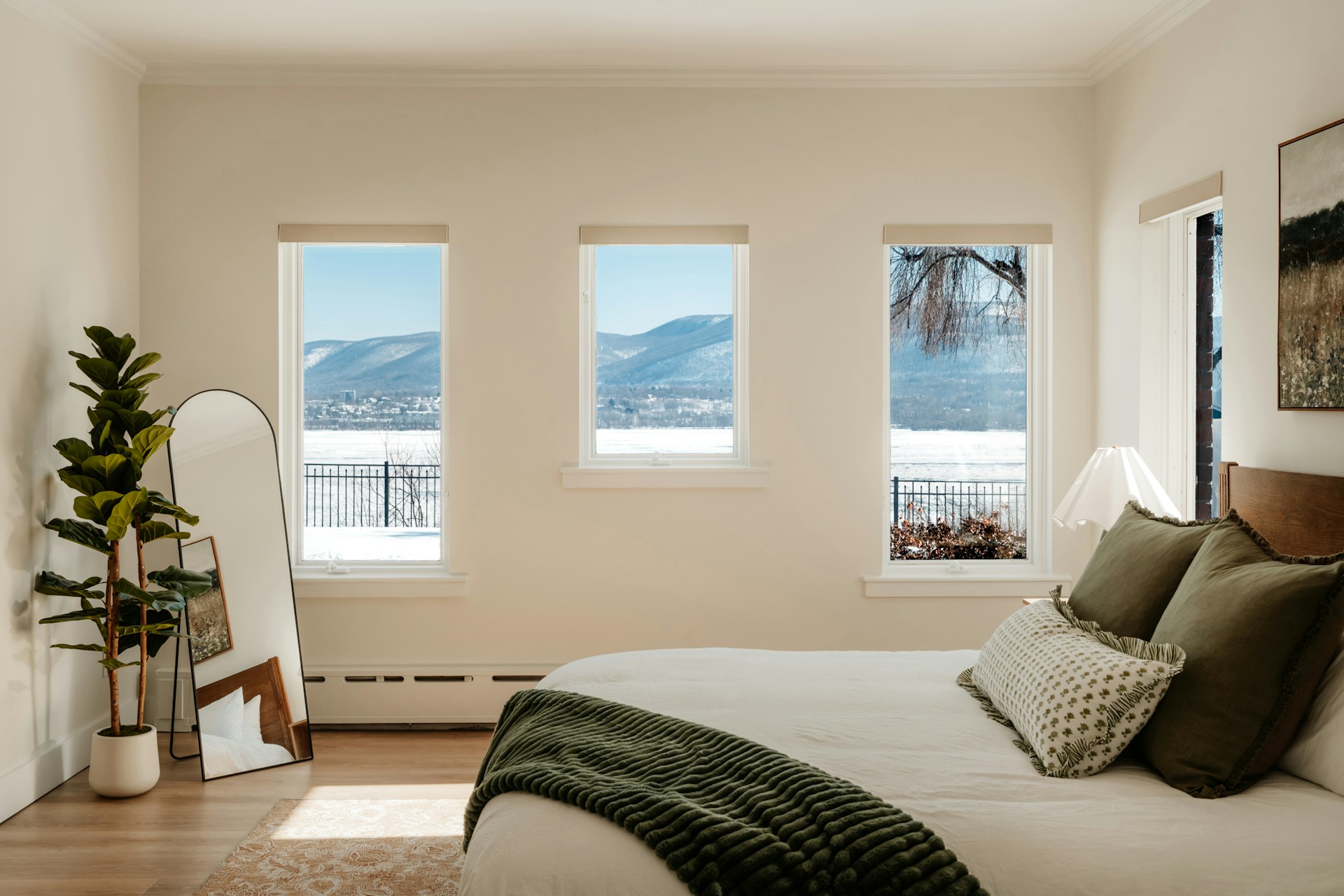
Beyond the interior design strategies already covered, a few other home staging factors can be just as important in achieving the end goal: making the space feel bigger and more inviting to travellers looking for somewhere to stay in your area. Two are worth calling out in particular – keeping things minimal, and lighting dark corners well.
Decluttering: why tidying up matters
When decorating your holiday rental, decluttering is one technique worth using. It involves removing anything unnecessary to create a greater sense of space in each room and improve overall comfort.
Clearing out excess belongings to create a more minimalist space brings a sense of calm and order, and helps avoid visual overload. As a rule, it’s best to avoid overly busy decor and cluttered-looking spaces.
Lighting up dark corners effectively
Alongside natural light, it’s worth spending time choosing artificial lighting that suits the space and shows it off properly.
Dark corners or insufficient lighting can make a space feel smaller to potential guests, making your holiday rental less appealing overall.
On the other hand, a good mix of light sources, floor lamps, ceiling lights and indirect lighting, will help eliminate shadows and add visual depth to the room.
Keep in mind that cooler light works better in functional areas, while warmer light suits more relaxed, comfortable rooms. This ensures each space is properly suited to what guests need from it.
Photography and how your listing is perceived
When you list your holiday rental on a booking portal, how appealing the photos look really matters to anyone browsing online. The photos you use to showcase your property become one of the biggest factors in how a guest perceives it and whether they’re interested.
To boost your bookings, it’s essential that your photos reinforce that sense of space. Use the right photography techniques, such as shooting from the corners of a room or using a wide-angle lens, and pay close attention to lighting and exposure.
High-quality photography adds real value to your property and increases your conversion rate. Professional photos, thanks to their higher quality, tend to perform noticeably better.
These days, some platforms act as genuine strategic partners on this front. Holidu is a good example, offering free professional photography services as well as the option to list your property across more than 25 platforms, giving your holiday rental broader, more polished exposure and helping it stand out in a crowded holiday rental market, which ultimately drives more bookings.